The Confucius Institute Munich recently hosted its 217th Cultural Salon, featuring a lecture by PD Dr. phil. habil. Jiehua Cai, a distinguished scholar from the Institute of Sinology at Ludwig-Maximilians-Universität München. The hybrid event, held on February 13, explored “Mysterious Pearls: A Journey into the Wonderful World of Ancient Chinese Literature.”
Dr. Cai’s presentation centered on the pearl, an image deeply embedded with symbolic significance in Chinese culture. She elaborated on the pearl’s diverse connotations throughout ancient Chinese civilization, noting its role not merely as a treasured ornament or tribute, but also as a profound cultural emblem linked to power, happiness, destiny, and the rise and fall of dynasties. Historically, pearls were often perceived as auspicious omens, yet they could also carry warnings of decline, with their influence extending even into the afterlife, reflecting the complex traditional Chinese understanding of fate and human existence.
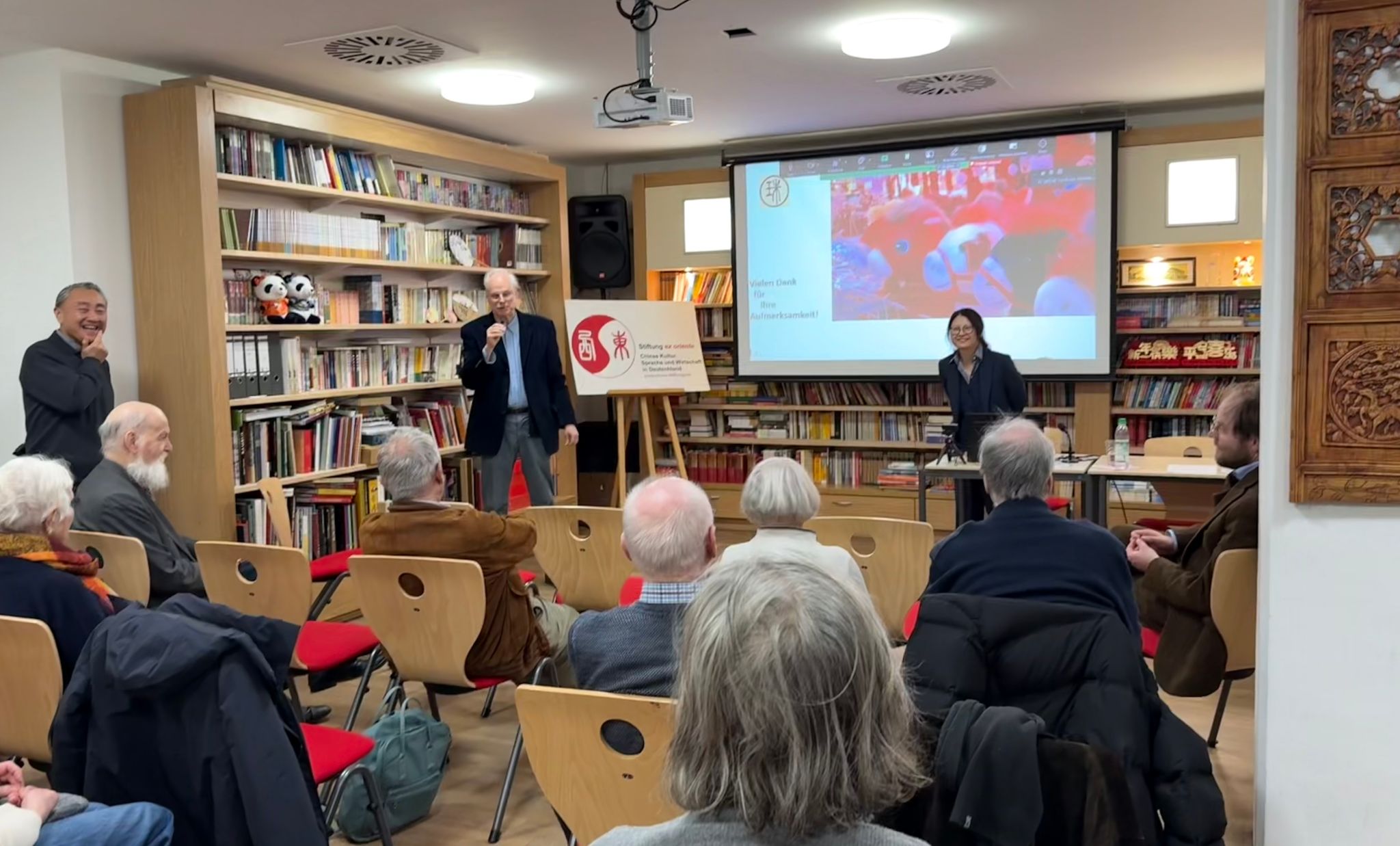
The lecture then explored a rich tapestry of ancient Chinese literary narratives, vividly illustrating the various manifestations of the pearl motif in classical texts. From naturally formed pearls to “special pearls” documented in ancient writings—endowed with extraordinary or even mystical properties—these literary accounts underscore the profound roots and unique allure of pearls within China’s spiritual and cultural history. Furthermore, Dr. Cai connected these historical insights to contemporary society, discussing the pearl’s symbolic meaning and applications in the modern world, such as its cultural significance in important public settings, thereby guiding attendees to appreciate its continuity and evolution from historical to modern contexts.
The event concluded with an engaging Q&A session, where attendees actively participated, raising questions that spanned topics from pearl production methods and international trade to their diverse cultural values and meanings across different societies. This Cultural Salon not only deepened the audience’s understanding of ancient Chinese literature and cultural symbolism but also offered fresh perspectives on the enduring vitality of traditional cultural elements in contemporary society.