About the Institute
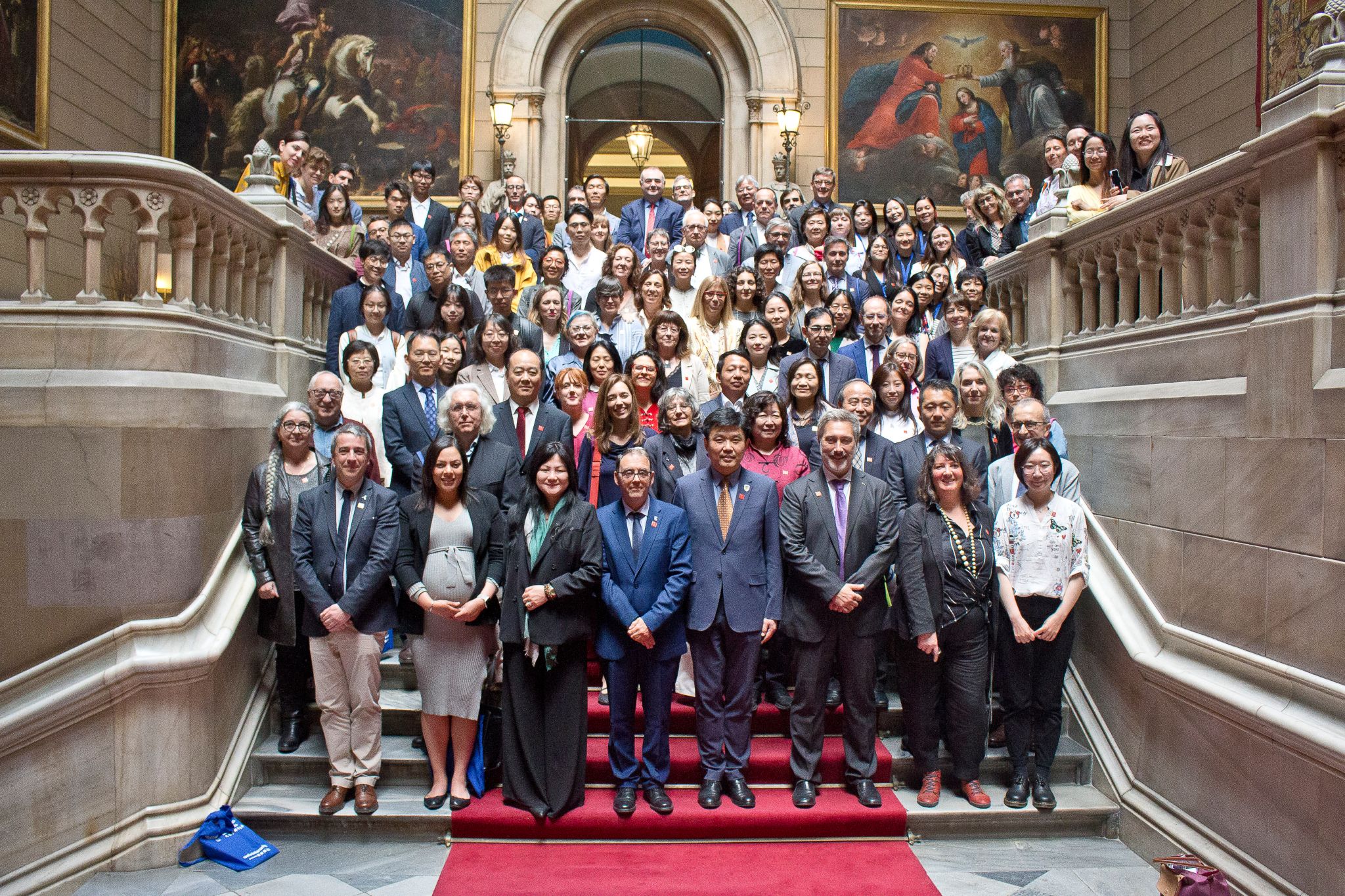
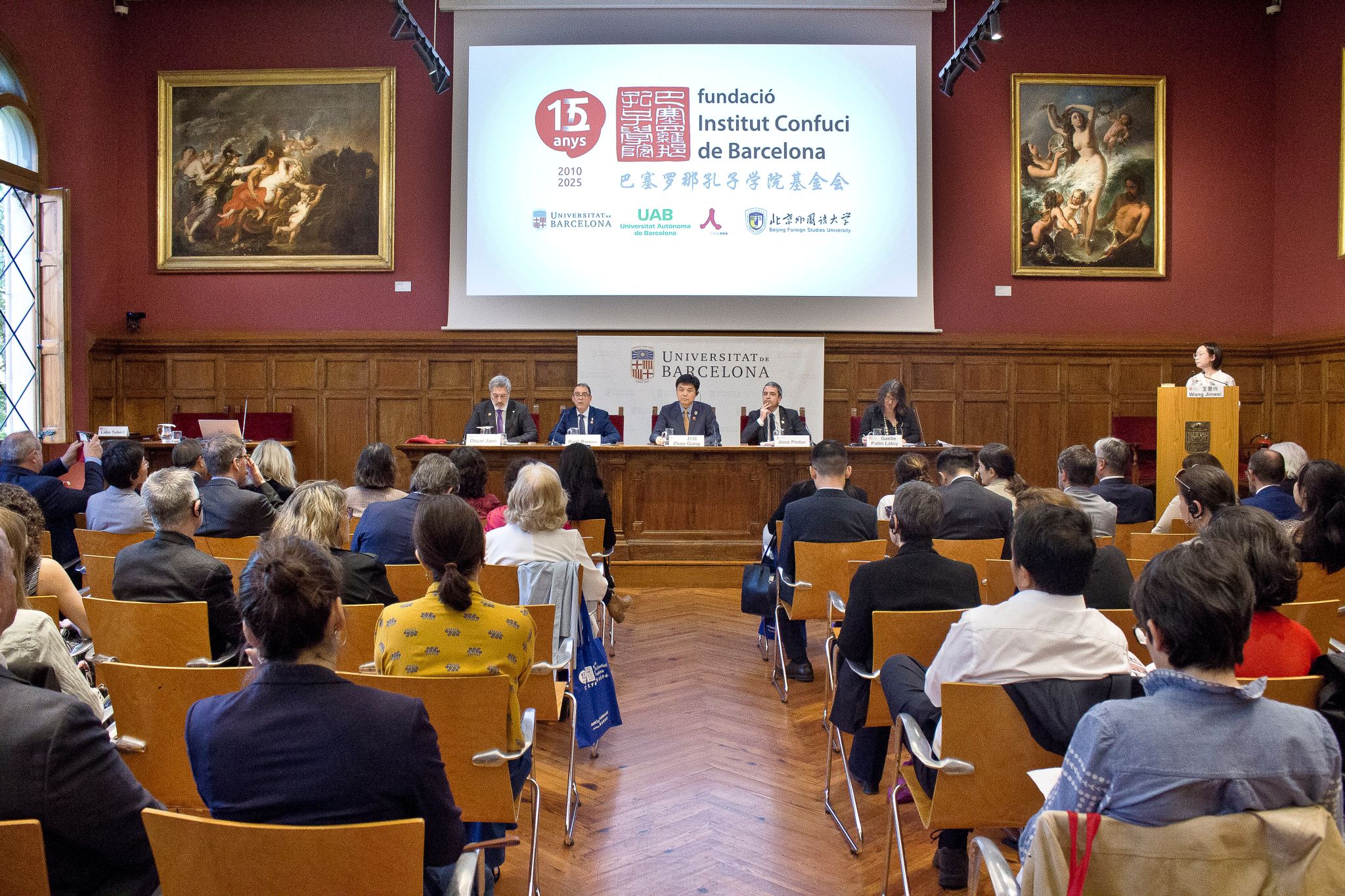
The Confucius Institute in Barcelona was established in 2010 through a partnership between Beijing Foreign Studies University (BFSU), the University of Barcelona (Universitat de Barcelona), the Autonomous University of Barcelona (Universitat Autònoma de Barcelona), and Casa Asia. It is the only Confucius Institute in Catalonia, and 2025 marks its fifteenth anniversary.
Legally registered as an independent foundation (Fundació Institut Confuci de Barcelona, FICB) under Catalan law, the Institute operates as a platform for Sino-Spanish cultural exchange and Chinese language education. Located in the Raval district of Barcelona—adjacent to leading universities and cultural institutions—the Institute serves all of Catalonia and the Principality of Andorra. Facilities include Chinese language classrooms, a library, and a multipurpose activity hall.
The Institute currently employs 25 staff and teaching faculty, with additional internship positions maintained in partnership with local universities.
Programs and Activities
Chinese Language Teaching
The Institute offers multilevel Chinese language courses for university students, primary and secondary school pupils, adult learners, and corporate employees. Regular long-term courses include general Chinese (beginner to advanced), business Chinese, Chinese for tourism, HSK exam preparation, spoken Chinese, and creative writing. Courses are available for academic credit, as electives, and as interest-based programs.
The Institute operates its main campus, one secondary school teaching site, and five university teaching sites, along with three affiliated Confucius Classrooms, forming a teaching network spanning Catalonia and Andorra. In 2025, the Institute offered 162 course sections with more than 1,800 enrolled students. Digital tools—including the Additio, Edvoice, and e-Chinese Plus platforms alongside AI-assisted learning resources—have been integrated to strengthen both quality and reach.
Proficiency Tests
The Institute is the only institution in Catalonia authorized to administer official Chinese language examinations, including the HSK, HSKK, YCT, and CTC. Beyond its own testing center, it has established examination venues at the University of Barcelona, the University of Andorra, the University of Girona, Rovira i Virgili University, and the University of Lleida, providing broad regional coverage.
In 2025, the Institute piloted fully online HSK testing and administered the HSK 7–9 examination for the first time in November. Total annual exam registrations reached 1,151, with a record 312 candidates in a single YCT session. The Institute has received the HSK Outstanding Examination Center award for multiple consecutive years, and in November 2025 was honored at the World Chinese Language Conference in Beijing with the 2025 CTC Outstanding Examination Center award.
Faculty Development & Academic Research
The Institute works closely with the Catalan Department of Education to support local Chinese language teachers. In July 2025, it hosted the fourth edition of the In-Service Teacher Training Program in Chinese Language and Culture—co-organized with the Department of Education—with 38 local teachers completing a six-day intensive course. Six online training sessions held throughout the year attracted more than 240 teacher participants in total.
The Institute publishes the peer-reviewed academic journal 《中》(Zhong) (eISSN: 2938-1479), dedicated to translating Chinese scholarship into Spanish and Catalan, and produces the bilingual magazine 《彩墨》(Color y Tinta), now in its eleventh issue, documenting the Institute’s teaching and cultural programs.
Cultural Programs
Cultural activities and courses remain a core part of FICB’s work. They strengthen its local presence and reputation while helping retain current students and attract new ones. In 2025, the Institute organized 53 cultural events attended by approximately 40,000 people.
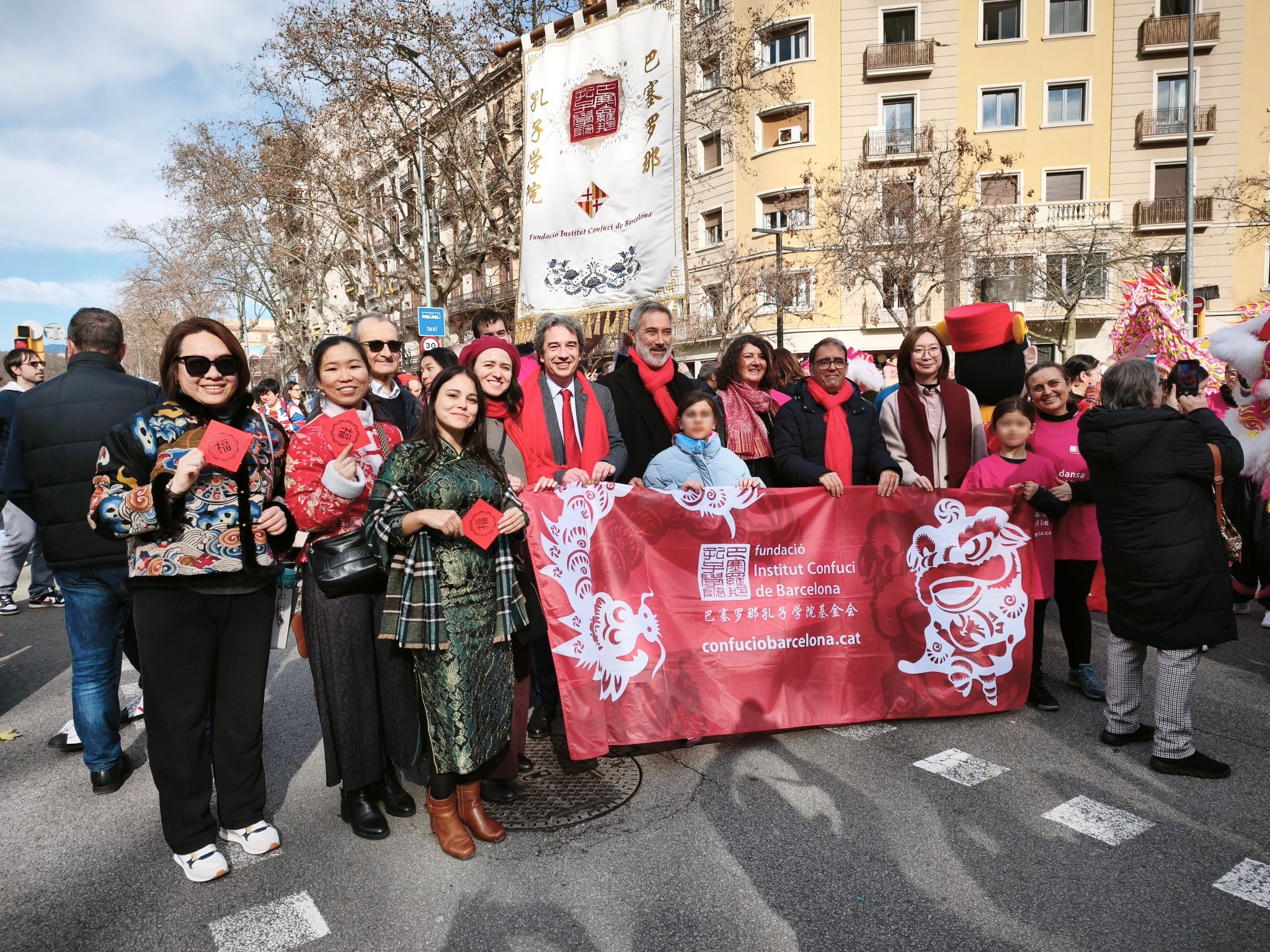
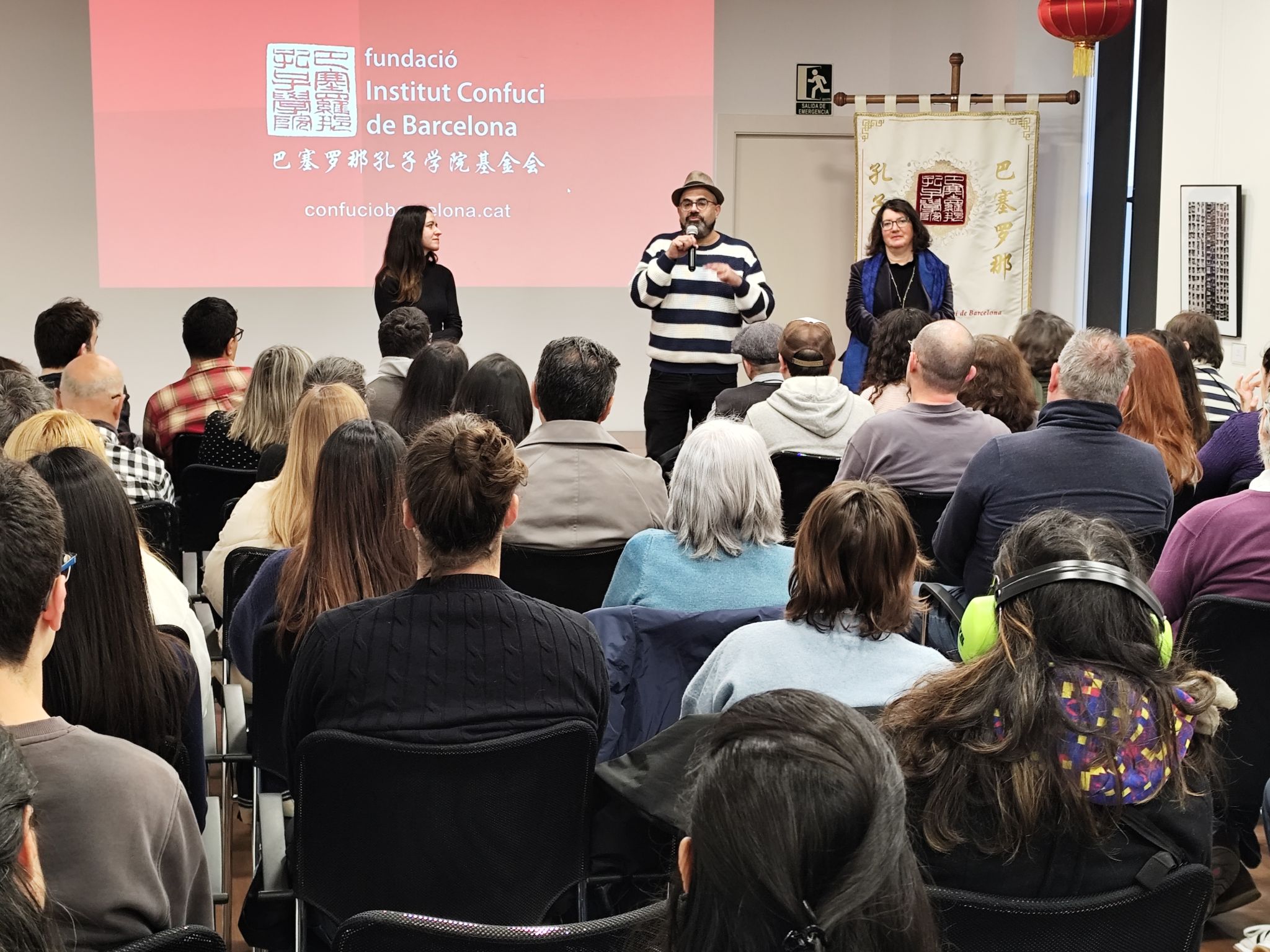
Alongside recurring programs—Chinese New Year celebrations, Confucius Institute Day, and the “Chinese Bridge” competition—the Institute delivered signature events including the large-scale Celebrating the New Year with Barcelona festival, the Film Club Program (CineClub FICB), which includes film screenings at the Institute as well as collaborations with local film festivals, and the Literature Program, through which leading authors and emerging voices, such as Yu Hua and Tang Fei, have been invited. The Institute has also recently launched the “China in Focus” project, consisting of a photography competition and exhibition.
Cultural courses cover calligraphy, Chinese painting, cooking, lion and dragon dance, qigong, mahjong, and cinema. The range of courses and student enrollment have expanded significantly in recent years. The Institute currently offers around 20 cultural courses each year, with more than 200 participants.
Under the Hola China (Hello China) framework, the Institute designed Chinese cultural workshops for primary, secondary, and university students across Catalonia—53 sessions in 2025 reaching more than 2,000 participants.
The Institute has built an extensive network of institutional partners, including the Catalan Department of Education, Barcelona City Council, the Chinese Consulate General in Barcelona, Casa Asia, the Ramon Llull Institute, La Boqueria Market, the Liceu Conservatory, and Casa Batlló.
Signature Initiatives
The Macro Confucio Network is the Institute’s flagship initiative, launched in 2016 to build a regional collaboration network among universities and institutions in Catalonia and Andorra. In 2025, the network reached a total of 13 member institutions, including Beijing Foreign Studies University, University of Barcelona, the Autonomous University of Barcelona, Casa Asia, the University of Andorra, the University of Girona, the University of Lleida, Rovira i Virgili University, the University of Vic–Central Catalonia, ESADE Foundation, Blanquerna–Ramon Llull University, Pompeu Fabra University and the International University of Catalonia, the latest institution to join. Members collaborate on exam administration, summer camps, book donations, cultural outreach, and teacher training.
Chinese + vocational courses integrate language learning with professional applications, offering tracks in Chinese + Business, Chinese + Tourism, and Chinese + Cinema.
Youth exchange and scholarships: Since 2011, the Institute has awarded 623 scholarships for study in China. Complementary programs include the Parlem MOS language exchange, Board Games for Chinese Learning sessions, and regular study-in-China information events, establishing the Institute as a key driver of youth engagement between Spain and China.
The Institute’s website is available in Catalan, Spanish, and Chinese, and its combined social media and newsletter following exceeds 10,000.
Looking Ahead
The Institute will continue to strengthen Chinese language education across Catalonia, expand the Macro Confucio network as a regional model for international Chinese education, and deepen the integration of AI and digital tools in language teaching. It will further develop strategic partnerships with Catalan government bodies, universities, and cultural institutions to increase the Institute’s presence in Europe and advance Sino-Spanish people-to-people exchange.
Contact
Chinese Director: WANG Jinwei
Spanish Director: Gaëlle Patin Laloy
Email: info@confuciobarcelona.es
Website: www.confuciobarcelona.es
Address: Carrer dels Elisabets, 10, 08001 Barcelona, Spain
Phone: +34 937 688 927